
Why Legal Client Intake Requires Specialised Handling
Most AI answering services take messages. They capture names, numbers, and basic queries. This works for plumbers and electricians but fails catastrophically for law firms.
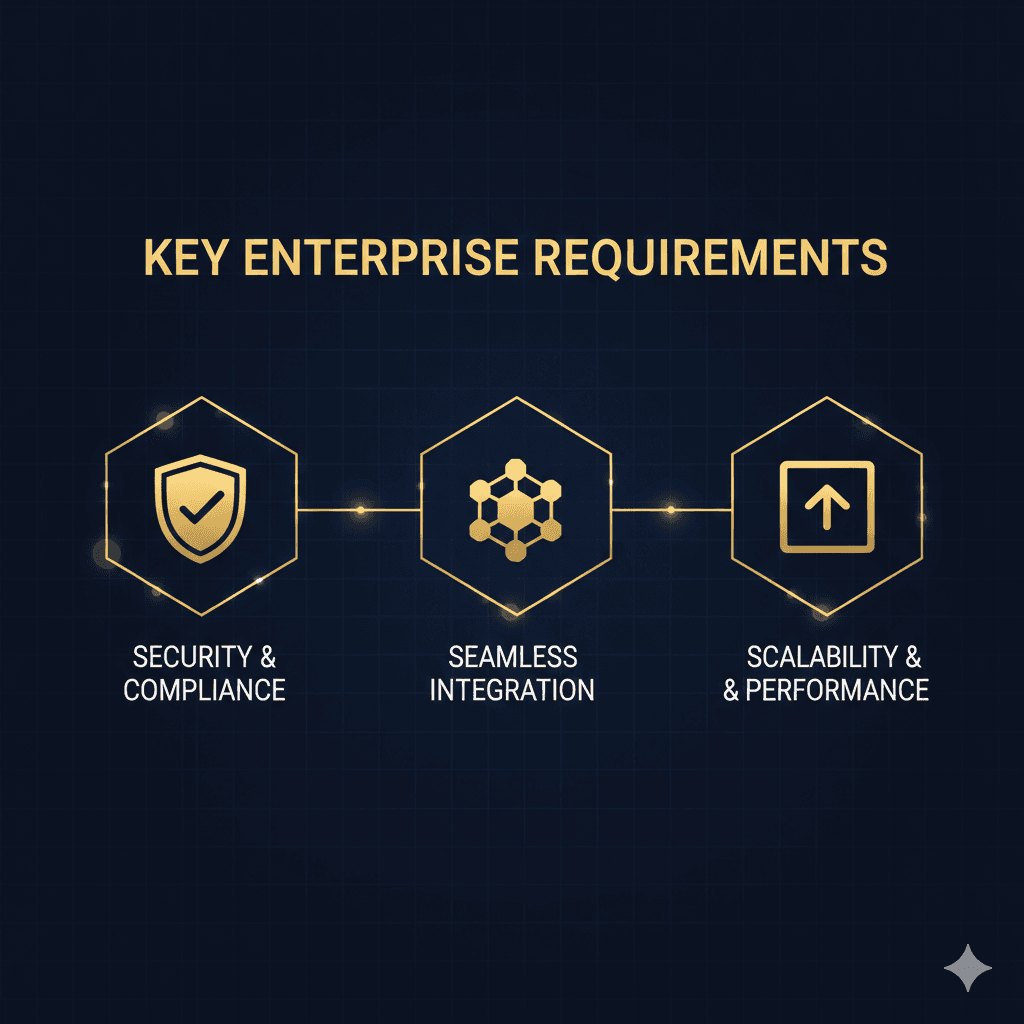
Legal intake requires four things generic answering services don't provide: practice area qualification, conflict screening, privilege protection, and compliance with Australian Solicitors' Conduct Rules. Miss any of these and you're either wasting time on unqualified leads or exposing your firm to regulatory risk.
Consider what happens when a personal injury prospect calls. A message-taking service captures their name and injury type. You call back two days later to discover they want to sue a current client, the statute of limitations expired yesterday, or they're shopping for a no-win-no-fee arrangement your firm doesn't offer. You've wasted 15 minutes on a call that should have been filtered in 90 seconds.
How AI Handles Practice Area Qualification
Practice area qualification means asking the questions that determine whether a prospect is a good fit before a lawyer wastes time calling back. Family law prospects need different questions than commercial litigation prospects.
AI systems designed for legal intake pull this information from your website and practice area descriptions. They identify your specialisations (conveyancing, criminal defence, employment law, commercial litigation) and build question sets automatically. A conveyancing AI asks about property type, settlement timeline, and loan status. A family law AI asks about children, violence orders, and asset complexity.
The technical challenge is understanding legal terminology without manual configuration. Systems like Trillet scrape your website, Google reviews, and social media to learn your practice areas in under five minutes. No $1,000 setup fee. No three-day configuration process. The research AI reads your content the way a human paralegal would, then generates appropriate intake questions.
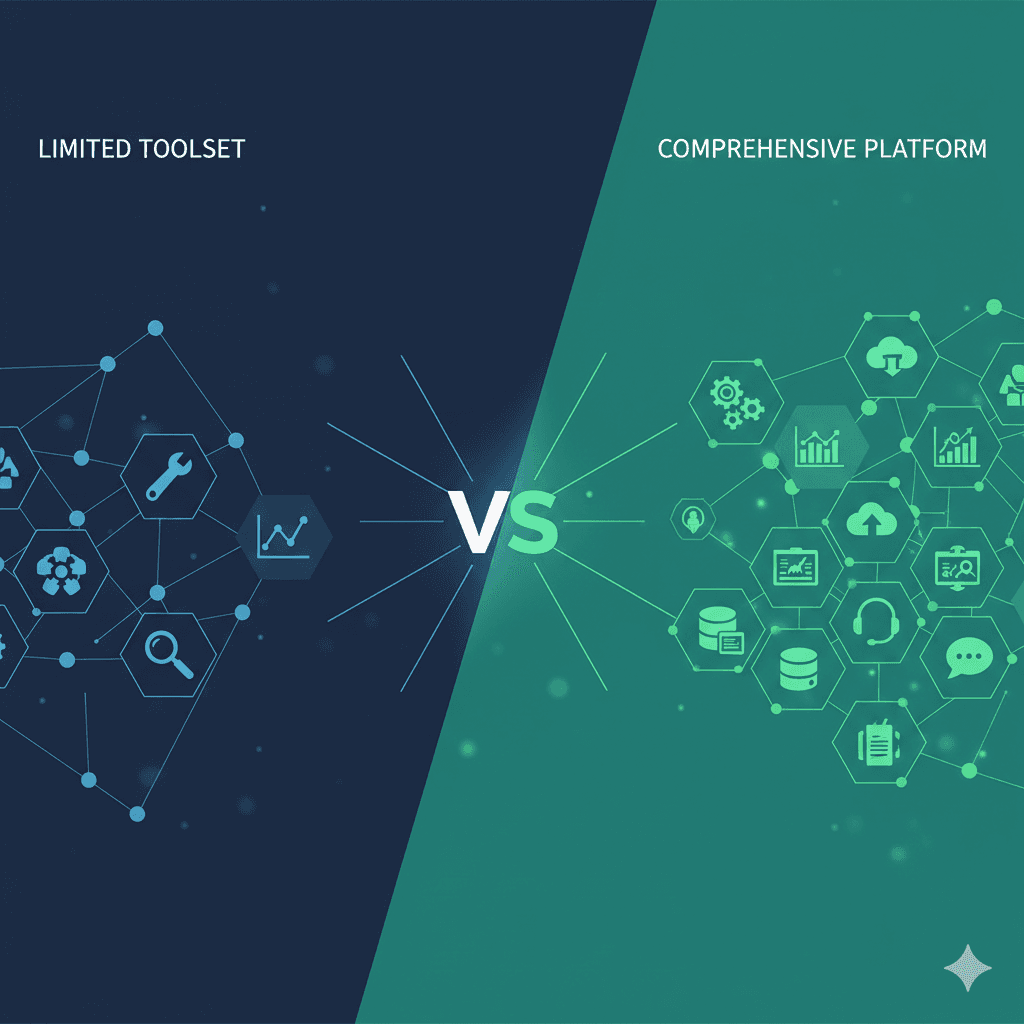
This automated learning is the difference between AI answering services and marketing agencies reselling the same technology. Agencies charge setup fees because they configure systems manually. Direct AI platforms eliminate that cost through automated research frameworks.
What About Attorney-Client Privilege?
Attorney-client privilege attaches the moment a potential client shares confidential information with the reasonable expectation of legal representation. This happens during intake calls, not just formal retainer agreements. Your answering system is part of your practice for privilege purposes.
Under Australian Solicitors' Conduct Rules, you must protect communications with prospective clients the same way you protect current client communications. This means any AI system handling calls must comply with the Privacy Act 1988 and Australian Privacy Principles, particularly APP 11 (security of personal information) and APP 8 (cross-border disclosure).
Most US-based answering services (Smith.ai, Ruby, AnswerConnect) store call data on American servers. This creates a cross-border disclosure under APP 8 that requires explicit consent and contractual safeguards. Many solicitors don't realise they're technically non-compliant until a client complains to the Office of the Australian Information Commissioner.
Australian-based AI services process calls domestically. Trillet runs on Melbourne servers and complies with Privacy Act requirements without requiring cross-border consent forms. This matters more for litigation and criminal defence firms where privilege issues regularly appear in court.
How AI Performs Conflict Checks During Intake
Conflict checking is the process of identifying whether a potential client has interests adverse to current or former clients. Australian Solicitors' Conduct Rules require conflict checks before accepting any retainer. Most firms run these manually after intake.
AI answering services can perform basic conflict screening during the initial call by asking specific questions. For litigation matters: who is the opposing party? For conveyancing: who is the other side's lawyer? For family law: has your spouse retained counsel?
This front-line screening catches obvious conflicts (prospect wants to sue your current client) before you waste time on detailed intake. The AI flags the conflict in its summary so you can decline representation immediately rather than discovering the issue three days later during formal conflicts review.
AI systems don't access your practice management software or conflict database. They can't perform the same database checks your conflicts team runs. But they can ask the questions that reveal obvious adverse parties, which is 80% of conflict screening work.
When Does Your Phone Ring vs When Does AI Answer?
Conditional call forwarding means your phone rings first. AI only answers if you're unavailable, busy, or don't pick up within four rings. This is different from voicemail (which prospects hang up on) and receptionist services (which answer everything).
For lawyers, this matters because you can still take urgent calls from judges, barristers, and existing clients while AI handles unknown numbers and new prospects. Most legal answering services force you to choose: either answer everything yourself or send everything to the service. Conditional forwarding gives you both.
The technical implementation uses your mobile carrier's conditional forwarding settings. Calls forward to the AI number only when your phone is busy, unanswered, or unreachable. No app installation required. Works with Telstra, Optus, and Vodafone. Takes two minutes to configure.
How AI Integrates With Legal Practice Management Systems
Most Australian law firms run LEAP, ActionStep, Smokeball, or Clio. These systems handle matters, billing, and client records. Getting intake data into your practice management system determines whether AI answering actually saves time or just creates extra data entry work.
Basic AI services email you summaries. You read the summary, then manually create a contact record in your practice management system. This still saves time compared to playing voicemails but requires duplicate data entry.
More sophisticated systems integrate directly with practice management platforms. Intake data flows automatically into your matter pipeline or CRM. For firms handling 50+ new enquiries monthly, this eliminates hours of administrative work. These integrations typically require a professional plan and custom configuration, but they're available if your volume justifies it.
What's the Actual Cost Comparison?
Let's compare actual costs across different answering solutions. These numbers reflect 2026 Australian market rates.
Solution | Monthly Cost | Setup Fee | Location |
Part-time receptionist | $2,700+ | $0 | Australia |
Law clerk/intern | $0 (billable time) | $0 | Australia |
Smith.ai (human) | $595-$1,695 | $0 | United States |
Marketing agency AI | $200-$500 | $1,000+ | Varies |
Direct AI platform | $29 | $0 | Australia |
The part-time receptionist number assumes 15 hours per week at $23.23 per hour (minimum wage) plus superannuation. It doesn't include WorkCover, leave entitlements, or training time. Most legal receptionists earn significantly more than minimum wage.
Law clerks and interns appear free but consume billable time. A clerk earning $35 per hour represents $280 in lost revenue per eight-hour day if they're answering phones instead of working on matters. They also lack training in client intake, create inconsistent caller experiences, and aren't available during exams or between university semesters. This approach works for very small practices with low call volume but scales poorly.
Marketing agency costs vary because many agencies white-label existing AI platforms and add manual configuration. They charge setup fees because they're configuring systems by hand rather than using automated research frameworks. You're paying for labour, not technology.
Direct AI platforms eliminate setup fees through automated learning. Systems scan your website and online presence to understand your practice areas, then generate appropriate intake questions. The technology does what agencies charge $1,000+ for.
What About Call Quality and Professionalism?
AI voice quality has improved dramatically since 2022. Current systems use neural text-to-speech that sounds natural enough that most callers don't immediately recognise they're speaking with AI. The tells are unusual pauses and occasional context misunderstandings, not robotic voice quality.
For legal intake, this matters less than you'd expect. Most prospects calling law firms have never spoken to anyone at your firm before. They don't know whether your receptionist has a slightly unusual speaking pattern. They care about getting their questions answered and feeling heard.
The bigger professionalism risk is mishandling legal terminology or getting confused by complex scenarios. This is where practice area training matters. An AI that understands the difference between a caveat and a covenant handles conveyancing calls professionally. One that doesn't creates credibility problems.
Most firms test AI answering by calling their own number. Good systems provide free trial periods for this exact purpose. Call yourself, test the intake questions, check whether it handles your practice areas correctly. If it sounds unprofessional or gets confused easily, try a different provider.
Implementation Reality Check
Setting up AI answering takes between five minutes and three days depending on which system you choose. The automated research platforms (like Trillet at trillet.ai) scan your website and configure themselves in under five minutes. Marketing agency solutions take longer because they involve manual setup calls and custom configuration.
The technical steps are simple. You configure conditional call forwarding through your mobile carrier. Most lawyers use Telstra, Optus, or Vodafone. Each carrier has different codes but the process is identical: dial a code, enter the forwarding number, done. The AI service provides specific instructions for your carrier.
The harder part is training yourself to trust the system. Most lawyers instinctively answer every call. Breaking this habit takes about two weeks. You'll keep grabbing your phone unnecessarily. Eventually you realise the AI handles routine intake fine and you only need to take calls from existing clients, referral sources, and courts.
When AI Answering Doesn't Make Sense
AI answering services don't work for every law firm. Large firms with existing reception teams don't need them. Firms handling exclusively barrister referrals don't benefit because barristers want to speak directly to solicitors, not intake systems.
Solo practitioners and small firms get the most value. If you're currently missing calls because you're in court, at settlements, or deep in document review, AI answering captures prospects who would otherwise hang up and call your competitor. For firms running Google Ads or other lead generation, it means instant follow-up instead of prospects going cold while you're unavailable.
The break-even calculation is straightforward. If you miss more than two qualified prospects per month due to missed calls, an AI answering service at $29 per month pays for itself. One retained client covers the cost for a year.
Next Steps
Legal intake requires specialised AI that understands practice areas, protects privilege, and complies with Australian regulations. Generic answering services create more problems than they solve. Test systems that offer Australian data storage, automated practice area learning, and conditional forwarding so you're still reachable for urgent matters.
The technology works. The question is whether your firm's call volume and practice areas justify implementation. For most solo and small firm practitioners, the answer is yes. Trillet handles these requirements automatically and learns your practice areas in five minutes. See how it works at trillet.ai.