
How Trillet Works: Three Steps That Secure Jobs (Not Just Messages)
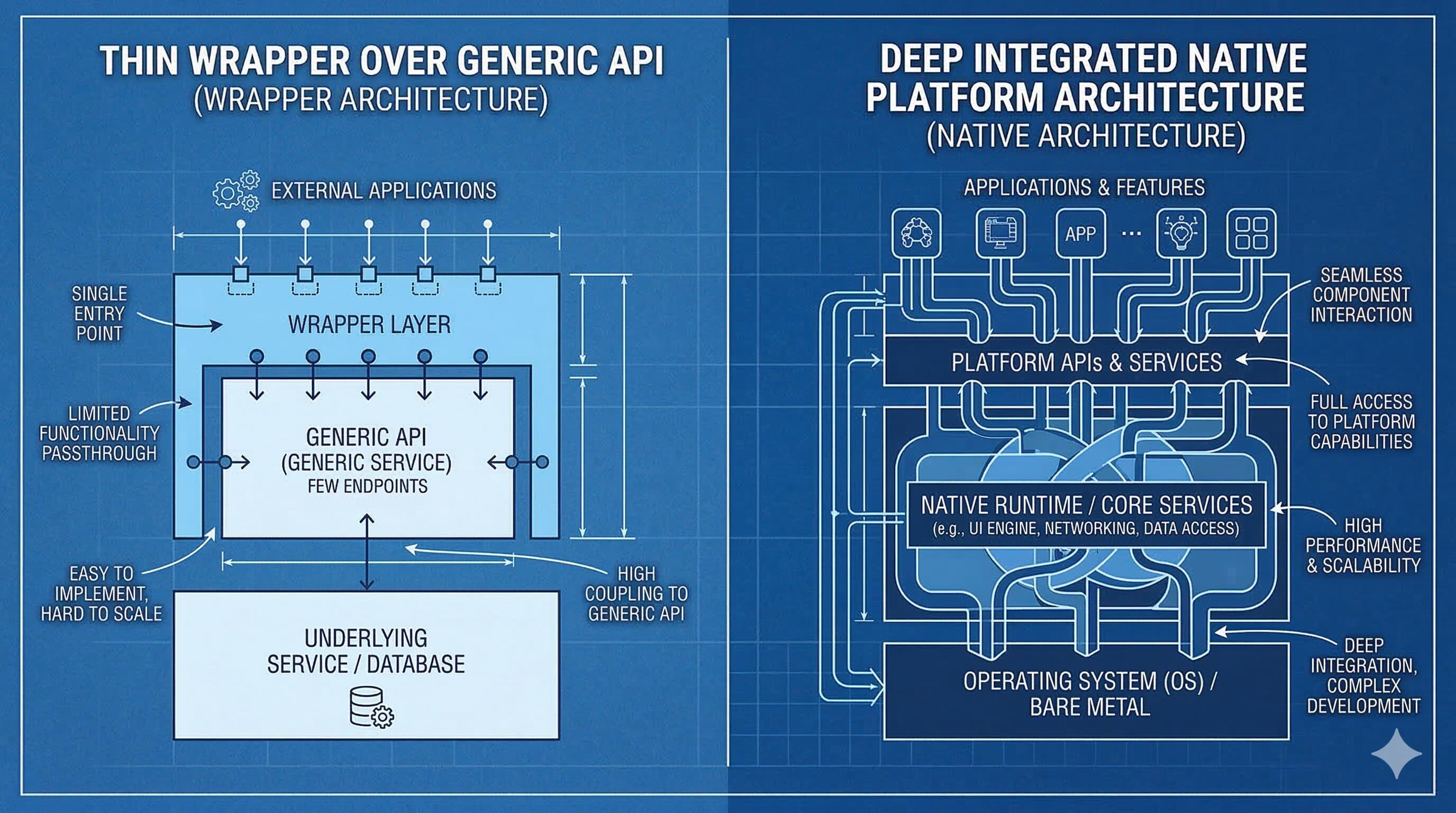
Most answering services, including Ruby, stop working the moment they hang up the phone. Trillet is just getting started. Every call goes through three stages that extend beyond traditional call handling:
1. Vet Every Caller (Blocks Spam Automatically)
Trillet filters out robocalls, telemarketers, and spam calls using AI-powered screening before they reach you. Ruby answers every call including spam, which counts toward your billable minutes at per-minute rates.
2. Automate Intake (Collects Job-Specific Details)
Unlike services that simply say "leave your name and number," Trillet completes your intake checklist during the call:
HVAC contractors: System type, age of unit, urgency level, property details, preferred service window
Plumbers: Issue type, property age, emergency status, photos of problem area (via text), timeline
Electricians: Current issue, panel type, permit requirements, property access details
Auto shops: Vehicle make, model, year, mileage, service history, symptoms
What Ruby gives you: "Sarah called about her car. Please call her back."
What Trillet gives you: "Sarah's 2018 Honda Civic (87k miles) needs brake service. Last service was 6 months ago. She's available Tuesday afternoons and her budget is $300-500."
3. Handle Follow-Ups (Included Standard, No One Else Does This)
When a caller isn't ready to commit ("I'm still browsing" or "Let me think about it"), Ruby ends the call and you must manually follow up. Trillet automatically sends personalized follow-up texts 2-3 days later to keep leads warm and convert hesitant callers into booked jobs.
Example follow-ups that actually convert:
For HVAC contractors: "Hi, this is Trillet for [Company]. You called about AC repair earlier this week. We have availability this Friday if you're ready to move forward. Book here: [Link]."
For law firms: "This is [Firm]'s assistant. I saw you called about [issue]. If this is time-sensitive, reply 'URGENT' and I'll alert the attorney immediately. Otherwise, book a consultation here: [Link]"
Research shows that 80% of sales occur between the 5th and 12th contact , yet 92% of salespeople give up after four attempts and 44% give up after just one . This single feature recovers leads that traditional answering services lose.
What Happens When a Customer Says "I'll Think About It"?
Ruby's Approach: Professional human takes detailed notes through structured questions → You receive notification → You manually call/text back → Play phone tag for days → That 3-minute call cost you $15 in billable minutes(based on Ruby’s $250 plan for 50 mins/mo)
Trillet's Approach: AI captures complete intake details including specific needs and budget → Sends booking link immediately → Automatically follows up 3 days later with personalized text if they haven't booked → $49(Trillet’s Pro Plan) + no additional human intervention.
The first vendors to respond to leads win 35-50% of sales, with some studies showing this number may exceed 78% . Ruby captures these leads professionally, but you handle the follow-up manually at significant cost. Trillet automates it entirely.
Quick Comparison Table
Feature | Trillet (Native AI) | Ruby (Human Receptionists) |
Primary Approach | Native AI Automation | Live Human Receptionists |
Monthly Cost | $29 (starting from 150 mins/mo) | $250 - $1,725 (Variable from 50 mins to 500 mins ) |
Answer Speed | Instant (0 seconds) | Under 10 seconds (average) |
Spam Filtering | ✅ Blocks before you see them | ❌ All calls answered & billed |
Intake Automation | ✅ Job-specific details | Standard message taking |
Follow-Up System | ✅ Automatic (included) | ❌ None |
Bilingual Support | ✅ 50+ Languages | ✅ English + Spanish |
Call Script Flexibility | Adapts in real-time | Structured scripts for consistency |
Setup Time | ~5 minutes | ~20 minutes |
Pricing
Ruby's Per-Minute Model
Ruby operates on a consumption-based model where plans range from $250 per month for 50 minutes up to $1,725 per month for 500 minutes .
The variability factor: During busy seasons or successful marketing campaigns, your bill increases proportionally with call volume.
Trillet's Per-Minute Model
$29/month for 150 minutes/month. As your business starts handling more minutes, the tier gets more cost effective, up to $116 for 750 minutes/month. Your cost-per-call decreases as your business grows.
Real-World Cost Scenarios
Scenario A: Growing Plumber (160 calls/month, avg 1 min = 160 minutes)
Ruby: ~$665/month ($395 base for 100-minute plan + Overage @ $4.50/min x 60)
Trillet: ~$31/month ($29 base for 150 minute plan + overage @ $0.2/min x 10)
Monthly Savings: $634
Scenario B: Small HVAC (75 calls/month, avg 2 min = 150 minutes)
Ruby: $395/month (on 100 minute plan)
Trillet: $29/month
Monthly Savings: $366
For businesses with predictable call volumes and stable monthly costs, Ruby's per-minute model works fine. For businesses with variable call patterns or rapid growth, Trillet offers a better alternative with lower overage costs.
Feature Breakdown
Spam Protection
Ruby: Answers all calls including spam, billing at per-minute rates . If you receive 20 spam calls per week at 2 minutes each, that's 160 wasted minutes per month, costing $524-752/month on spam alone.
Trillet: Blocks spam before it reaches you. You only see legitimate inquiries.
Booking and Scheduling
Ruby: Receptionists can schedule appointments if given calendar access and clear instructions. Works well for established booking processes.
Trillet: Instantly books to your calendar or sends secure booking links via text. Works 24/7, even at 3 AM.
Automated Follow-Up
Ruby: Doesn't currently offer automated follow-up. When the call ends, you must manually follow up or lose the lead.
Trillet: Automatically re-engages hesitant leads 2-3 days later with context-aware texts. If you receive 50 calls/month and 40% say "I'll think about it," that's 20 leads at risk. Responding within the first 5 minutes can increase conversion rates significantly, with one study showing a 391% increase in conversions when responding within one minute . If Trillet converts 25% (5 leads) at $300 average job value, that's $1,500 in recovered revenue monthly, 63x your subscription cost.
Multilingual Support
Ruby: English and Spanish.
Trillet: 50+ languages including Arabic, Hindi, Romanian, Mandarin, at no additional cost.
When Ruby Is the Right Choice
Ruby's human receptionists genuinely excel in specific scenarios:
1. Elderly Clientele
If your customers are 65+, many prefer speaking with humans and may find AI interactions confusing or impersonal. Ruby's patient human touch matters here.
2. Crisis or Trauma Services
Suicide hotlines, trauma counseling, domestic violence support, these require deep human empathy and nuanced emotional intelligence that AI cannot replicate. Ruby's humans are trained for sensitive conversations.
3. Ultra-Premium Positioning
If your brand is Ritz-Carlton-level (concierge medicine, luxury real estate, high-end consulting), every touchpoint communicates exclusivity. Ruby's humans reinforce premium positioning in ways that align with luxury brand expectations.
4. Complex Sales Requiring Human Nuance
High-touch B2B sales where reading tone, building rapport, and adapting to emotional cues matters more than speed or cost. Some deals require human judgment to navigate successfully.
For these specific use cases, Ruby's premium pricing is justified. The human touch isn't a luxury, it's a requirement.
When Trillet Is the Logical Choice
Trillet was built for owner-operators who can't afford to play phone tag. You should choose Trillet if you:
✅ Run trades or home services: Plumbers, HVAC, Electricians, Landscapers, Auto Shops, Contractors ✅ Want predictable bills: You need fixed monthly costs regardless of call volume ✅ Need true 24/7 availability: Without paying premium night rates or dealing with shift handoffs ✅ Value speed for transactional calls: Instant pickup for appointments, pricing questions, service inquiries ✅ Refuse to pay for spam: You're tired of per-minute charges for robocalls ✅ Want automated follow-ups: You don't have time to manually text every hesitant lead ✅ Have seasonal or unpredictable volume: Your call patterns fluctuate with weather, marketing, or seasonality
Winner by Category
Category | Winner | Why |
Pricing Predictability | Trillet | Starting at $29/mo for 150 mins vs $250/mo for 50 mins |
Spam Blocking | Trillet | Blocks before billing vs answers & bills all calls |
Intake Automation | Trillet | Collects job-specific details during call |
Follow-Up System | Trillet | Automatic (included) vs none |
Speed | Trillet | Instant vs approx 10 second average |
Scalability | Trillet | Unlimited calls at same price |
Multilingual | Trillet | 50+ languages vs 2 languages |
Human Warmth | Ruby | Real human voices every call |
Elderly Clientele | Ruby | Patient human interaction |
Crisis Services | Ruby | Trained for sensitive conversations |
Luxury Brand Alignment | Ruby | Premium positioning reinforcement |
Frequently Asked Questions
Why is Trillet so much cheaper than Ruby?
Trillet eliminates the labor cost of human receptionists. By using Native AI for the entire workflow, spam filtering, intake, and follow-ups, we pass automation savings directly to customers. Ruby must pay wages for hundreds of live receptionists, which is reflected in their pricing structure.
Does Trillet sound robotic?
No. Modern AI uses advanced voice synthesis that's often indistinguishable from humans in transactional conversations. Trillet handles interruptions, pauses, clarifying questions, and context shifts naturally. Most callers don't realize they're speaking with AI.
Does Trillet block spam calls?
Yes. Trillet uses AI-powered screening to block robocalls, telemarketers, and spam before they reach you. Ruby answers every call including spam, which counts toward your billable minutes.
Are follow-ups included in Trillet? Yes. Automated follow-up texts are included in the $49/mo Pro plan. No competitor, including Ruby, offers this.
Which is better for small businesses: Trillet or Ruby?
It depends on your clientele and business model. Trillet is better for small businesses needing predictable costs and lower overage costs ($29/mo for 150 mins + overage @ $0.2/min) and automated lead follow-up. Ruby is better for small businesses serving elderly clients or requiring human warmth on every call where the personal touch justifies variable pricing starting from $250 + overage @ $5.40.
Does Ruby's human touch justify the price difference?
It depends on your business and clientele. Ruby's human receptionists excel in scenarios where callers expect personal connection: high-end professional services, elderly clientele who may find AI confusing, crisis or trauma services requiring deep empathy, and ultra-premium brands where personal touch is part of the product.
For routine transactional calls (appointments, pricing, service inquiries), Trillet's AI handles these as effectively as humans, but faster, cheaper, and with automated follow-ups Ruby doesn't offer.
The question isn't whether humans are better, it's whether your specific business needs justify the price difference.
Can Trillet handle multiple calls at once?
Yes. Unlike Ruby's receptionists who handle one call at a time, Trillet's AI manages unlimited simultaneous calls. During busy periods (Monday mornings, post-storm for contractors), you'll never have customers on hold or going to voicemail.
What's the biggest difference between Trillet and Ruby?
Trillet uses AI automation for the entire customer journey, from spam filtering to intake, all for $29/mo flat rate. Automated follow ups are offered in the Trillet Pro Plan at $49/mo. Ruby uses live humans for every call with per-minute billing ($250-$1,695+/mo), providing authentic human interaction but no automated follow-up system.
For routine business calls, Trillet is faster and more comprehensive. For calls requiring human empathy, judgment, or premium brand reinforcement, Ruby provides value that justifies the premium.
Is Ruby worth the extra cost?
For businesses serving elderly clients, handling crisis calls, or positioning as ultra-premium brands where human interaction is central to brand identity, yes. The human touch isn't optional, it's required.
For trades and most service businesses handling routine transactional calls, the premium doesn't align with the value delivered, especially since Ruby doesn't include spam blocking or automated follow-ups.
How does Trillet handle follow-ups differently than Ruby?
Ruby doesn't currently offer automated follow-up. When calls end, interactions are over, you must manually text or call every hesitant lead yourself. Trillet automatically sends personalized, context-aware texts 2-3 days later to hesitant leads, keeping them engaged until they're ready to book. Research shows that the majority of sales, upwards of 80%, close after five or more follow-up calls , highlighting the importance of persistent follow-up.
What happens if Trillet encounters a question it can't answer?
If the AI encounters a question outside its scope, it collects the customer's information with full context and escalates to you immediately. You receive all relevant details to respond effectively. This happens in a small percentage of calls.
The Bottom Line
If you're an owner-operator eating cold dinner at 9 PM while manually calling back leads from three days ago, and you're paying per-minute rates for every spam call that interrupts your evening, Trillet eliminates that moment entirely.
Ruby was built for businesses where authentic human interaction on every call justifies variable monthly costs of $245-$1,695+. The receptionists are professional, the service is established, and for luxury brands or elderly clientele, the human touch is worth the premium.
Trillet was built for busy owner-operators who can't afford to play phone tag. We block spam, complete intake automatically, and charge $29/month in the basic plan for 150 minutes. As your business grows, you can move up the tier for more minutes, costing less per call.
Ruby captures calls professionally.
Trillet blocks spam, completes intake, follows up automatically, and secures the booking.
Most services leave you with a list of people to call back and bills that spike when you succeed. Trillet leaves you with booked appointments, filtered leads ready to close, and fixed costs that reward growth.
Ready to stop paying per-minute rates for spam calls?
Starting at $29/month. 30-day money-back guarantee.