
Why Most AI Answering Services Require Manual Setup
Traditional AI phone systems rely on a single data source: your website. An agent reads your homepage, maybe your about page, and builds a basic understanding of what you do. This works fine for straightforward businesses with clear service descriptions.
The problems emerge with complexity. A physiotherapy clinic that specialises in sports injuries needs the AI to understand which conditions they treat, which insurance providers they accept, and whether they do home visits. A website rarely captures these details in machine-readable format. Someone has to manually input 'we accept Medicare but not WorkCover' and 'we don't do weekend appointments for new patients.'
This manual configuration creates two issues. First, it takes time. Setup fees exist because someone spends hours learning your business and programming responses. Second, it misses edge cases. No matter how thorough the setup, real customer calls surface questions nobody anticipated.
What Data Sources Does Automated Research Scan?
Advanced automated research systems in 2026 pull from multiple sources simultaneously. The system starts with your website but treats it as a starting point, not the complete picture. Here's what gets analysed:
Website content: Every page, not just the homepage. Service descriptions, FAQ sections, blog posts, contact forms, and even image alt text.
Google Business Profile: Reviews reveal what customers actually ask about. If ten reviews mention 'bulk billing,' the AI learns this matters to your callers.
Social media posts: Facebook and Instagram updates often contain operational details missing from your website, like 'closed for renovations next week' or 'new staff member joining Monday.'
Video content: YouTube videos, testimonials, and explainer content get transcribed and analysed. A plumber's video showing 'how we fix blocked drains' teaches the AI about your process.
The system cross-references these sources. If your website says 'emergency service available' but reviews complain about weekend response times, the AI recognises a potential gap and flags it for clarification.
How Does AI Extract Business Rules from Websites?
Extracting structured information from unstructured web content requires pattern recognition across multiple formats. A law firm's website might list practice areas in a navigation menu, as headings on a services page, and within paragraph text describing past cases. The AI identifies these patterns and consolidates them into consistent categories.
Natural language processing handles variations in how businesses describe the same thing. 'We serve the Melbourne metro area,' 'Based in Melbourne CBD,' and 'Covering all Melbourne suburbs' all translate to the same geographic constraint. The system builds a knowledge graph connecting related concepts.
Pricing information gets special attention. Whether you list '$150 per hour,' 'Rates from $150/hr,' or 'Competitive pricing' affects how the AI discusses costs with callers. Some businesses want pricing mentioned upfront, others prefer it discussed only when asked. The system infers preferences from how prominently pricing appears on your site.
Contact form fields provide valuable signals. If your booking form asks for 'preferred appointment time' but not 'insurance provider,' the AI learns what information to prioritise during calls. Forms reveal your intake process without explicit programming.
Why Does Video Analysis Matter for Edge Cases?
Written content describes your business professionally. Video content shows how you actually operate. This distinction matters for handling unusual requests.
Speech-to-text transcription converts your videos into analysable text. A tradie's site tour video might mention 'we park on the street and bring equipment through the side gate' or 'if you've got a dog, just let us know beforehand.' These operational details rarely appear on service pages but affect customer experience.
Customer testimonial videos reveal edge cases through specific examples. When a customer says 'they came out on Christmas Eve to fix our air conditioning,' the AI learns you offer emergency holiday service. Another testimonial mentioning 'they worked with our strata committee' teaches the AI about your process for body corporate properties.
The technology combines automatic speech recognition with natural language understanding. Raw transcripts contain filler words, false starts, and unclear references. The system cleans this into structured information: 'emergency service: available holidays' and 'property types: strata buildings supported.'
This depth catches scenarios no manual setup would anticipate. Systems using only website scraping miss 30-40% of the practical knowledge customers need. Adding video analysis captures how you actually run your business, not just how you describe it.
How Do Automated Research Systems Handle Privacy and Compliance?
Australian Privacy Principles require careful handling of publicly available information. Automated research systems access only public-facing content, the same material any customer could find through Google. No data gets scraped from behind login pages, customer portals, or private social media accounts.
The distinction matters for industries with strict confidentiality requirements. A psychologist's website lists their qualifications and therapeutic approaches, information they've chosen to make public. Patient testimonials on Google Reviews are also publicly available. The system learns from this public information without accessing any clinical records or private communications.
Data retention follows best practices. Once the AI learns your business rules, the original scraped content isn't permanently stored. The system retains the structured knowledge graph (your services, policies, and procedures) but not copies of your entire website or social media history. This minimises data security risks while maintaining functionality.
What Happens After Automated Setup?
The five-minute automated research creates a functional baseline. The AI can answer 80-90% of typical questions immediately. The remaining 10-20% requires human refinement based on your specific preferences.
Real calls reveal gaps quickly. Perhaps your website says 'contact us for a quote' but you actually prefer to discuss pricing upfront for certain services. The AI flags these inconsistencies. You adjust the rules once and the change applies to all future calls.
Customisation happens through conversation, not code. Instead of editing configuration files, you tell the system 'when someone asks about emergency weekend service, let them know we charge a $200 callout fee on top of hourly rates.' The AI translates this instruction into appropriate call handling.
Integration with business systems comes later. The automated research handles the baseline knowledge. Connecting to your CRM, booking system, or trade management software requires additional setup, typically available through upgraded plans. For many businesses, the standalone answering service provides enough value before considering deeper integrations.
Ongoing updates stay simple. When you add a new service, post it on your website or social media. The system periodically refreshes its knowledge, picking up changes automatically. You don't manually update the AI every time your business evolves.
How Does This Compare to Agency-Provided AI Services?
Marketing agencies often charge $1,000-$2,000 in setup fees for AI answering services. This covers the time someone spends manually researching your business, writing custom scripts, and testing responses. Many agencies white-label existing platforms, adding human configuration on top.
Automated research systems eliminate most of this manual work. The technology does in five minutes what takes an agency staff member several hours. Systems like Trillet at trillet.ai perform this automated analysis and cost $29 per month with 150 minutes included and no setup fee. You get the same baseline capability without paying someone to manually transcribe your website into a configuration file.
The difference shows up in update cycles. With agency services, adding a new service or changing your pricing means contacting your account manager and waiting for updates. Automated systems refresh their knowledge periodically, picking up changes from your public-facing content without manual intervention.
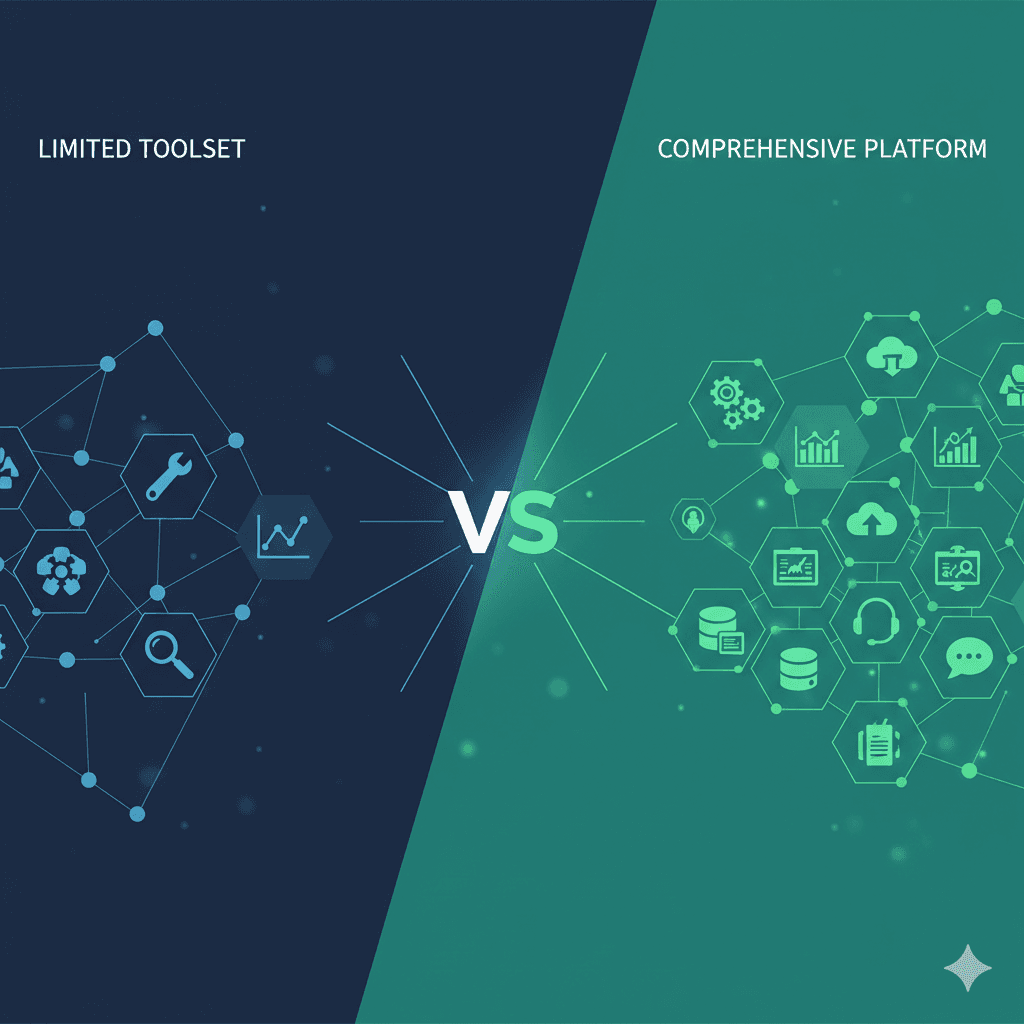
This doesn't eliminate all agency value. Complex enterprises with intricate approval workflows or custom integrations still benefit from hands-on configuration. But for small businesses with straightforward operations, direct access to automated research technology provides faster setup at lower cost.
The Gap Between Setup and Operation
The real advantage of automated research isn't just speed. It's accuracy. Manual configuration relies on what you remember to mention during setup. Automated systems find details you forgot to share, edge cases buried in customer reviews, and operational nuances visible only in your video content.
In 2026, the expectation for business software is 'it just works.' Five-minute setup powered by comprehensive automated research delivers on that expectation. Your digital presence already contains the information needed to handle calls properly. The technology simply needs to find it, structure it, and apply it consistently.
For Australian businesses considering AI answering services, ask about the research process. Systems that only scan your homepage will miss crucial details. Systems using multi-source analysis including video transcription capture how you actually operate, not just how your marketing materials describe it. The difference shows up in call quality from day one.