ViciDial Integration for Enterprise Call Centers: Production-Proven Voice AI
Trillet is the only voice AI platform with production-proven ViciDial integration, enabling call centers to deploy AI agents without replacing existing infrastructure.
ViciDial powers over 100,000 call center deployments globally, yet most voice AI vendors treat it as an afterthought. Enterprise call centers running ViciDial face a frustrating choice: rip out working infrastructure for cloud-only AI platforms, or continue without AI capabilities. Trillet's native ViciDial integration eliminates this trade-off, allowing voice AI to work alongside existing ViciDial deployments through proven production implementations.
For call centers seeking ViciDial-compatible voice AI, contact the Trillet Enterprise team to discuss your integration requirements.
Why ViciDial Integration Matters for Enterprise Call Centers
ViciDial remains dominant in enterprise call centers because it works. Replacing it introduces unnecessary risk.
Call centers have invested years configuring ViciDial campaigns, agent scripts, and reporting dashboards. Many run custom integrations with CRM systems, workforce management tools, and compliance recording platforms. When voice AI vendors require a "cloud migration," they're asking enterprises to rebuild these integrations from scratch.
The real cost is not the platform fee. It is the 6 to 12 months of integration work, the retraining of supervisors on new dashboards, and the risk of downtime during migration. Enterprise call centers running 50,000+ daily calls cannot afford this disruption.
Trillet's ViciDial integration preserves existing infrastructure investments while adding voice AI capabilities:
No ViciDial replacement required: AI agents integrate with existing campaigns and queues
Familiar supervisor experience: Call monitoring and reporting stay in ViciDial
Preserved integrations: CRM connectors, compliance recording, and WFM tools continue working
Gradual rollout: Deploy AI on specific campaigns before expanding
How Trillet's ViciDial Integration Works
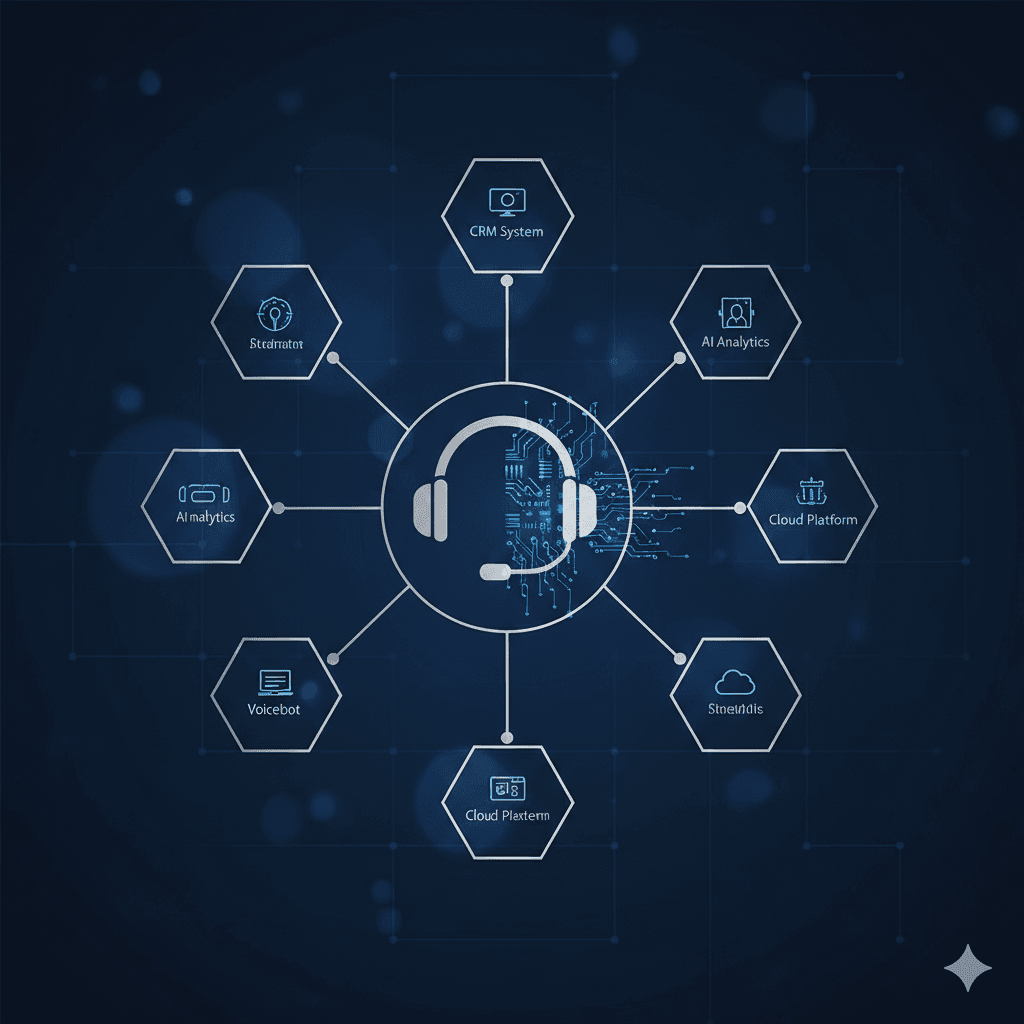
The integration operates at the SIP trunk level, routing calls between ViciDial and Trillet's voice AI engine.
Architecture Overview
Component | Function | Where It Runs |
ViciDial dialplan | Routes calls to AI or human agents | Existing ViciDial server |
SIP trunk | Carries voice traffic between systems | Network layer |
Trillet AI engine | Processes conversations, makes decisions | Trillet cloud or on-premise |
API bridge | Syncs call data, dispositions, lead updates | Secure connection |
Calls flow through ViciDial's existing dialplan. When configured for AI handling, ViciDial routes the call via SIP trunk to Trillet's voice AI engine. The AI handles the conversation, then passes disposition data back to ViciDial for standard reporting and lead management.
Integration Modes
Mode 1: AI as First Responder
The AI answers inbound calls, qualifies leads, and routes complex inquiries to human agents through ViciDial's queue. This reduces average wait time while ensuring human agents handle calls requiring judgment.
Mode 2: AI Overflow Handling
When ViciDial queues exceed capacity, overflow calls route to AI agents. This prevents abandoned calls during peak periods without requiring additional human staff.
Mode 3: AI Outbound Campaigns
AI agents execute outbound campaigns directly through ViciDial's dialer integration. Lead dispositions sync back to ViciDial for standard campaign reporting and list management.
Mode 4: Hybrid Conversations
AI handles routine portions of calls (verification, appointment confirmation, payment processing), then transfers to human agents for complex discussions. ViciDial tracks the full call journey.
What Makes This Integration Production-Proven
Trillet's ViciDial integration has been validated in live enterprise deployments, not just lab testing.
As of January 2026, production deployments demonstrate:
Call volumes exceeding 10,000 daily AI-handled calls per implementation
Integration stability across ViciDial versions 2.11 through 2.14
SIP trunk configurations for both on-premise and hosted ViciDial instances
Bidirectional data sync including lead dispositions, call recordings, and agent notes
The distinction between "supported" and "production-proven" matters. Many vendors claim ViciDial compatibility based on theoretical SIP connectivity. Trillet's integration has been stress-tested in actual enterprise environments with real call volumes, compliance requirements, and edge cases.
Common Integration Challenges (And How They're Solved)
Challenge | Typical Vendor Approach | Trillet Solution |
Disposition sync | Manual export/import | Real-time API sync |
Recording compliance | Separate recording system | ViciDial-native recording preserved |
Queue monitoring | AI calls invisible to supervisors | Unified dashboard visibility |
Failover handling | Calls drop during AI outage | Automatic ViciDial fallback |
Technical Requirements for ViciDial Integration
Implementing ViciDial integration requires specific infrastructure preparation.
Prerequisites
ViciDial Environment:
ViciDial version 2.11 or later (2.14 recommended)
Asterisk 13.x, 16.x, or 18.x
Dedicated SIP trunk capacity for AI traffic
API access enabled for external integrations
Network Requirements:
Secure connection between ViciDial and Trillet (VPN or private circuit)
Minimum 100ms round-trip latency for acceptable conversation quality
Firewall rules permitting SIP/RTP traffic and API calls
Compliance Considerations:
Call recording configuration aligned with jurisdiction requirements
PCI DSS scope assessment if handling payment information
Data residency requirements for AI processing location
Integration Timeline
For a typical enterprise deployment with 50+ agents and established ViciDial infrastructure, expect:
Phase | Duration | Activities |
Discovery | 1-2 weeks | Infrastructure audit, use case definition |
Configuration | 2-3 weeks | SIP trunk setup, dialplan modifications, API integration |
Testing | 2-3 weeks | Pilot campaign, edge case handling, supervisor training |
Production rollout | 1-2 weeks | Gradual traffic increase, monitoring, optimization |
Total implementation timeline typically ranges from 6 to 10 weeks depending on complexity and internal approval processes.
Comparison: ViciDial Integration Approaches
Not all voice AI platforms offer the same level of ViciDial integration depth.
Capability | Trillet | Typical Cloud AI | DIY Integration |
SIP trunk integration | Native | Requires custom dev | Manual configuration |
Disposition sync | Real-time API | Export/import | Custom scripts |
On-premise option | Docker deployment | Cloud-only | Depends on solution |
Queue visibility | Unified dashboard | Separate systems | Manual correlation |
Failover to ViciDial | Automatic | Not supported | Custom development |
Implementation support | Fully managed | Self-serve | Internal team |
The DIY Trap
Some enterprises attempt to build ViciDial-to-AI integration internally using generic voice AI APIs. This approach typically encounters:
Unexpected complexity: SIP interoperability issues, DTMF handling, transfer scenarios
Ongoing maintenance burden: API version changes, security patches, feature updates
No production validation: Edge cases discovered in live traffic
The internal development cost often exceeds managed service pricing within 12 to 18 months, while delivering less reliable results.
Use Cases: Where ViciDial + Voice AI Delivers Value
Enterprise call centers achieve specific outcomes from ViciDial-integrated voice AI.
Lead Qualification at Scale
Insurance call centers process thousands of inbound quote requests daily. AI agents handle initial qualification, collecting policy details and coverage requirements, then route qualified leads to licensed agents. ViciDial tracks full lead journey with AI and human interaction history.
Appointment Scheduling Automation
Healthcare networks use AI agents to handle appointment scheduling calls. The AI checks provider availability, confirms patient information, and books appointments. Complex cases (new patient intake, specialist referrals) route to human schedulers through ViciDial queues.
After-Hours Coverage
Financial services firms extend service hours without overnight staffing. AI agents handle routine inquiries (account balances, transaction history) during off-hours. Urgent matters trigger escalation protocols with human callback scheduling.
Collection Campaign Efficiency
Debt collection agencies use AI for initial outreach on aged accounts. AI agents confirm debtor identity, offer payment arrangements, and process payments. Human collectors focus on accounts requiring negotiation, receiving AI interaction history through ViciDial.
Security and Compliance Considerations
Enterprise ViciDial deployments typically exist in regulated environments requiring specific controls.
Data Flow Security
Trillet's ViciDial integration supports multiple data protection configurations:
VPN tunnels between ViciDial and Trillet infrastructure
Private circuit connectivity for high-security environments
On-premise deployment keeping all voice processing within enterprise network
Compliance Certifications
Trillet Enterprise maintains compliance certifications relevant to call center operations:
SOC 2 Type II (USA)
HIPAA (healthcare)
APRA CPS 234 and IRAP (Australia)
Call Recording and Retention
ViciDial's existing recording infrastructure remains operational. AI-handled calls record through the same mechanisms as human-agent calls, maintaining consistent compliance and quality assurance processes.
Frequently Asked Questions
Does this integration require replacing ViciDial?
No. The integration adds voice AI capabilities to existing ViciDial infrastructure. ViciDial continues operating as the primary call center platform with AI agents available through SIP trunk routing.
What happens if the AI system experiences an outage?
Automatic failover routes calls to ViciDial queues for human agent handling. Supervisors see standard queue metrics and can redistribute workload. When AI service restores, routing resumes automatically.
Can AI agents access ViciDial lead data during calls?
Yes. The API integration allows AI agents to query ViciDial lead records, access call history, and update dispositions in real-time during conversations.
How do I get started with ViciDial integration?
Contact the Trillet Enterprise team to discuss your ViciDial environment, call volumes, and use cases. The discovery process identifies integration requirements and provides implementation timeline estimates.
Is on-premise deployment available?
Yes. Trillet is the only voice AI platform offering on-premise deployment via Docker. For call centers with strict data residency requirements, the entire voice AI engine can run within enterprise infrastructure.
Conclusion
ViciDial integration represents a practical path to voice AI adoption for enterprise call centers. Rather than forcing infrastructure replacement, Trillet's production-proven integration allows AI capabilities to enhance existing ViciDial investments.
For call centers running ViciDial and evaluating voice AI options, the integration approach matters as much as AI capability. A theoretically powerful AI platform requiring complete infrastructure replacement delivers less value than a well-integrated solution working within existing systems.
Contact the Trillet Enterprise team to discuss ViciDial integration for your call center environment.
Related Resources:
Enterprise Voice AI Orchestration Guide - Complete guide for large organization deployments
Voice AI Legacy System Integration Approaches - Integration patterns for enterprise telephony
On-Premise Voice AI Deployment via Docker - Self-hosted deployment options
Call Center AI Automation Managed Services - Managed service model for enterprises