"64% of Customers Prefer No AI" — Why This Stat Is Misleading Your Business
The Gartner stat that 64% of customers prefer no AI in customer service reflects frustration with outdated IVR systems and scripted chatbots, not modern conversational voice AI that answers calls in under 2 seconds.
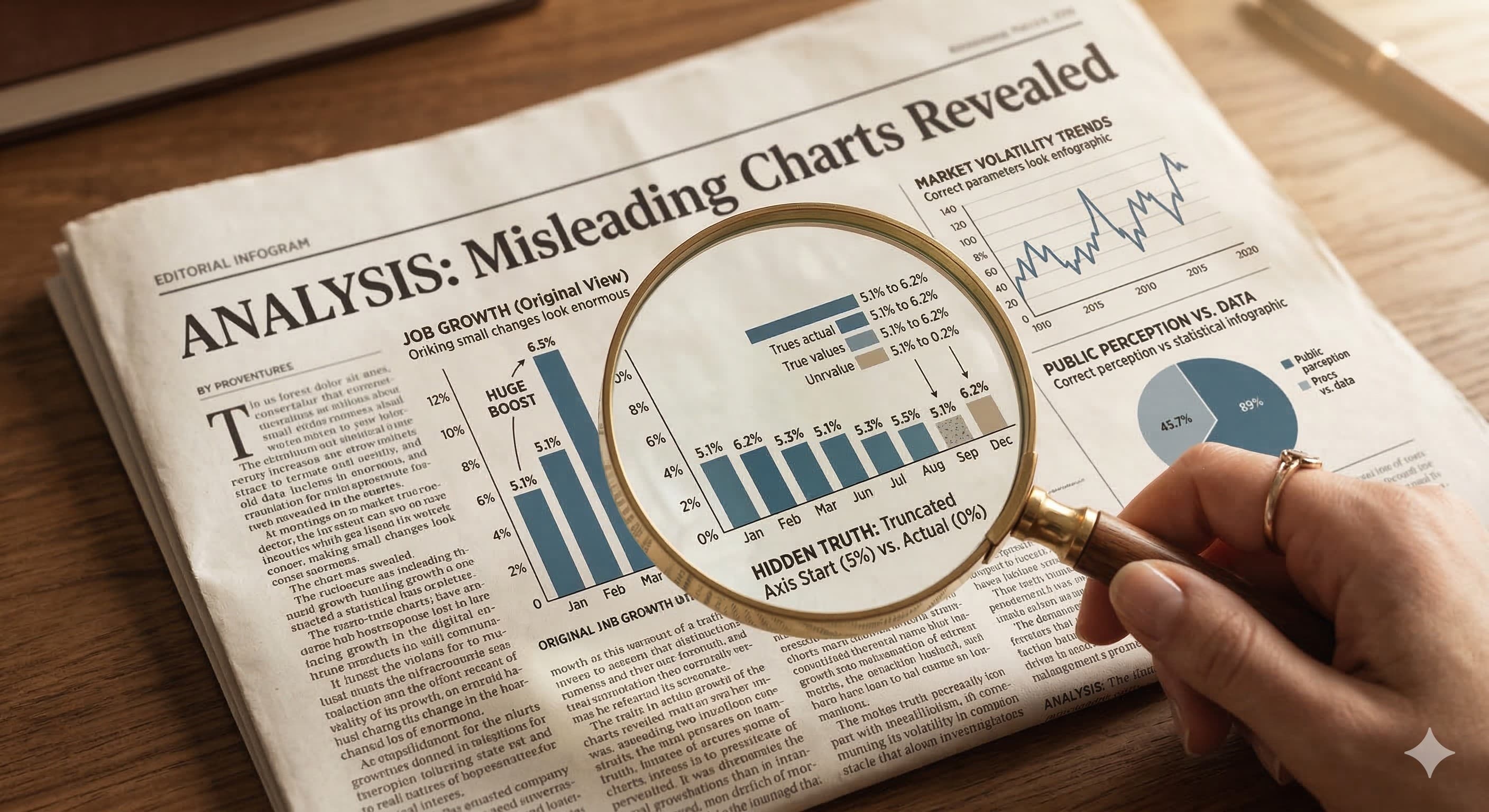
If you have seen this number circulating on LinkedIn, in trade publications, or in a competitor's sales deck, you are not alone. It has become the go-to statistic for anyone arguing against AI adoption. But the data deserves more context than a headline can provide. When you dig into what customers were actually reacting to, the picture changes dramatically — and the real risk to your business becomes clear.
Which Trillet product is right for you?
Small businesses: Trillet AI Receptionist - 24/7 call answering starting at $49/month
Agencies: Trillet White-Label - Studio $99/month or Agency $299/month (unlimited sub-accounts)
What Were Customers Actually Reacting To?
The 64% figure captures frustration with legacy AI experiences, not modern voice AI technology.
Think about the AI customer service experiences most people had before 2024. They were pressing 1 for billing, pressing 2 for support, pressing 0 repeatedly to reach a human. They were typing into website chatbots that looped them through the same three scripted responses. They were shouting "REPRESENTATIVE" at an automated phone system that could not understand them.
That is the AI these respondents were picturing when they answered the survey. And honestly, who would not prefer to skip that experience?
But here is what the stat does not capture: the callers who spoke with a modern AI receptionist that sounded natural, answered their question in seconds, and either resolved their issue or transferred them to the right person. Those interactions barely register as "AI" to most callers because the experience feels like talking to a competent, friendly receptionist.
The technology gap between 2023-era customer service AI and today's conversational voice AI is enormous. Latency has dropped from 3-5 seconds to under 1 second. Voice quality has shifted from obviously robotic to virtually indistinguishable from human speech. And contextual understanding has gone from keyword matching to genuine conversational ability.
Does the Stat Account for the Alternative?
Sixty-four percent may prefer no AI, but virtually zero percent prefer voicemail — and that is the real alternative for most small businesses.
Here is the data point that matters more than any survey about AI preferences:
80% of callers who reach voicemail hang up without leaving a message (Forbes)
78% of customers buy from the first business that responds (Lead Connect)
A missed call costs the average small business $100-$200 in lost revenue (Invoca)
Speed-to-lead drops conversion rates by 391% after just one minute of delay (Velocify)
So the real question is not whether customers prefer AI or a human. The real question is whether they prefer an AI receptionist that answers in 1 second or a voicemail box they will never use.
When you frame the choice accurately — AI that helps versus silence that loses the customer forever — the preference data looks very different. Your callers are not choosing between AI and a full-time human receptionist. They are choosing between AI and nobody.
Is the Stat About Bad AI or All AI?
The survey measures sentiment about bad AI experiences. Modern voice AI earns dramatically different reactions.
This distinction matters. Customers who interact with well-implemented AI receptionists report 85-92% satisfaction rates, matching or exceeding traditional human receptionist benchmarks. That is not a small gap from 64% dissatisfaction — it is practically an inversion.
What separates the AI that customers reject from the AI that customers appreciate?
Sub-2-second response times versus 5-10 second delays that create awkward silences
Natural conversational voices versus robotic text-to-speech
Business-specific knowledge versus generic scripted responses that cannot answer basic questions
Seamless human transfer when needed versus dead-end loops with no escalation path
24/7 availability versus "our office is currently closed, please call back"
The survey respondents were not evaluating these capabilities. They were reacting to years of accumulated frustration with IVR phone trees and scripted bots. Comparing those systems to modern voice AI is like comparing a 2005 flip phone camera to a current smartphone camera and concluding people do not like taking photos.
Does Selection Bias Affect the Numbers?
Surveys about AI preferences inherently over-represent negative experiences because dissatisfied customers are more vocal.
This is a well-documented pattern in customer research. People who had a bad experience with AI customer service are significantly more likely to hold a strong opinion about it — and therefore more likely to respond to a survey asking about it. Meanwhile, the millions of callers who had seamless AI interactions barely registered the experience as notable.
Consider your own behavior. When was the last time you called a business, got your question answered quickly, and then thought deeply about whether the voice on the other end was human or AI? Successful interactions are invisible. Failed ones create lasting negative impressions.
The 64% figure captures this asymmetry. It reflects the vocal minority who have been burned by poor implementations, not the silent majority whose AI interactions resolved without friction.
What Is the Actual Cost of Avoiding AI?
Businesses that avoid AI due to this stat are losing far more customers to missed calls than they would ever lose to AI skepticism.
Let us run the numbers for a typical small business:
Scenario | Monthly Impact |
Missed calls without AI (estimated 15-30/month) | $1,500 - $6,000 in lost revenue |
Callers who reach voicemail and hang up (80%) | 12-24 lost leads per month |
After-hours calls with no coverage | 35-50% of total call volume lost |
AI receptionist cost | $49/month |
AI receptionist answer rate | 100% of calls, 24/7 |
The math is straightforward. Even if a small percentage of callers genuinely dislike interacting with AI — and the actual number for modern voice AI is far lower than 64% — the revenue recovered from answering every call dramatically outweighs any friction.
A caller who talks to your AI receptionist and is mildly underwhelmed still has a path to resolution. A caller who hits voicemail at 7 PM is gone. They are calling your competitor before your voicemail notification even arrives.
What Does Current Data Say About Modern Voice AI?
Post-2024 data on conversational voice AI tells a fundamentally different story than the Gartner survey.
Recent findings from businesses using modern AI receptionists show:
73% of callers report being satisfied or very satisfied with AI interactions when the AI performs well, regardless of whether they knew it was AI
85-92% satisfaction rates across thousands of small business deployments using quality voice AI platforms
68% of callers cannot reliably distinguish between a well-implemented AI receptionist and a human receptionist
After-hours AI interactions score 88-94% satisfaction — because the alternative was no answer at all
The trajectory is clear. As voice quality, latency, and conversational intelligence improve, the gap between "AI preference" surveys and actual experience data will continue to widen. Businesses waiting for the survey numbers to shift before adopting AI are leaving money on the table every single day.
How Should You Actually Interpret This Stat?
Use the Gartner finding as a quality benchmark, not a reason to avoid AI entirely.
The 64% stat is genuinely useful if you read it correctly. It tells you that customers have zero patience for bad AI. It tells you that if you deploy a cheap, robotic, scripted system that traps callers in loops, your customers will hate it. That is a valid warning.
But the appropriate response is not "avoid AI." It is "choose good AI." Specifically, look for:
Low latency: Response times under 2 seconds so conversations feel natural
Quality voice synthesis: Natural-sounding voices that do not trigger the "I am talking to a robot" reaction
Business-specific training: AI that knows your services, hours, pricing, and common customer questions from scraping your website on setup
Human escalation paths: Seamless call transfer capabilities for complex issues
Continuous improvement: Systems that learn from interactions and let you refine responses
The stat is a warning about quality, not a verdict on the technology. Respect the finding. Then choose a platform that addresses every concern it raises.
Frequently Asked Questions
Will my customers leave if they find out I use AI to answer calls?
No. Customer churn from AI receptionist deployment is virtually nonexistent when the AI performs well. Customers leave when calls go unanswered, appointments get missed, or they feel ignored. An AI receptionist that handles their call professionally and promptly creates a better experience than voicemail or long hold times.
Which Trillet product should I choose?
If you are a small business owner looking for AI call answering, start with Trillet AI Receptionist at $49/month. If you are an agency wanting to resell voice AI to clients, explore Trillet White-Label — Studio at $99/month (up to 3 sub-accounts) or Agency at $299/month (unlimited sub-accounts).
Should I tell customers they are speaking with AI?
Transparency builds trust. Many businesses include a brief disclosure and find it has no negative impact on satisfaction. Callers care about getting help, not about the technology delivering it. What matters is that the experience is fast, accurate, and helpful.
What if my industry has older customers who resist AI?
Age-based resistance to AI is declining rapidly. Data from 2025-2026 shows customers over 55 report similar satisfaction rates with quality AI receptionists as younger demographics. The quality of the interaction matters far more than the age of the caller. A well-implemented AI receptionist that speaks clearly and handles requests efficiently works across all demographics.
Is the 64% stat completely wrong?
No. Gartner is a respected research firm and the data reflects genuine sentiment. The issue is interpretation. The stat accurately captures how people feel about the AI experiences they have had — which were overwhelmingly poor-quality chatbots and IVR systems. It does not reflect how people respond to modern conversational voice AI, which most survey respondents had never experienced.
Conclusion
The "64% prefer no AI" stat is real, but it describes a problem that modern voice AI has already solved. Customers dislike bad AI — robotic voices, scripted loops, and dead-end menus. They do not dislike fast, natural, helpful interactions that happen to be powered by AI. The far greater risk to your business is not that customers will object to AI. It is that you will keep losing callers to voicemail while waiting for a statistic to change.
Stop letting one misinterpreted data point cost you leads, revenue, and growth. Start with Trillet AI Receptionist at $49/month, answer every call, and let your own customer satisfaction data tell the real story.
Related Resources: